Reads the case file
Opens the formats Turkish courts use: UDF (the UYAP court system’s document format), Word, PDF, and scanned documents through OCR.
SeedLex AI reads case documents, plans and drafts petitions, and runs the day-to-day work of a firm. Client files stay encrypted on the lawyer’s own computer.
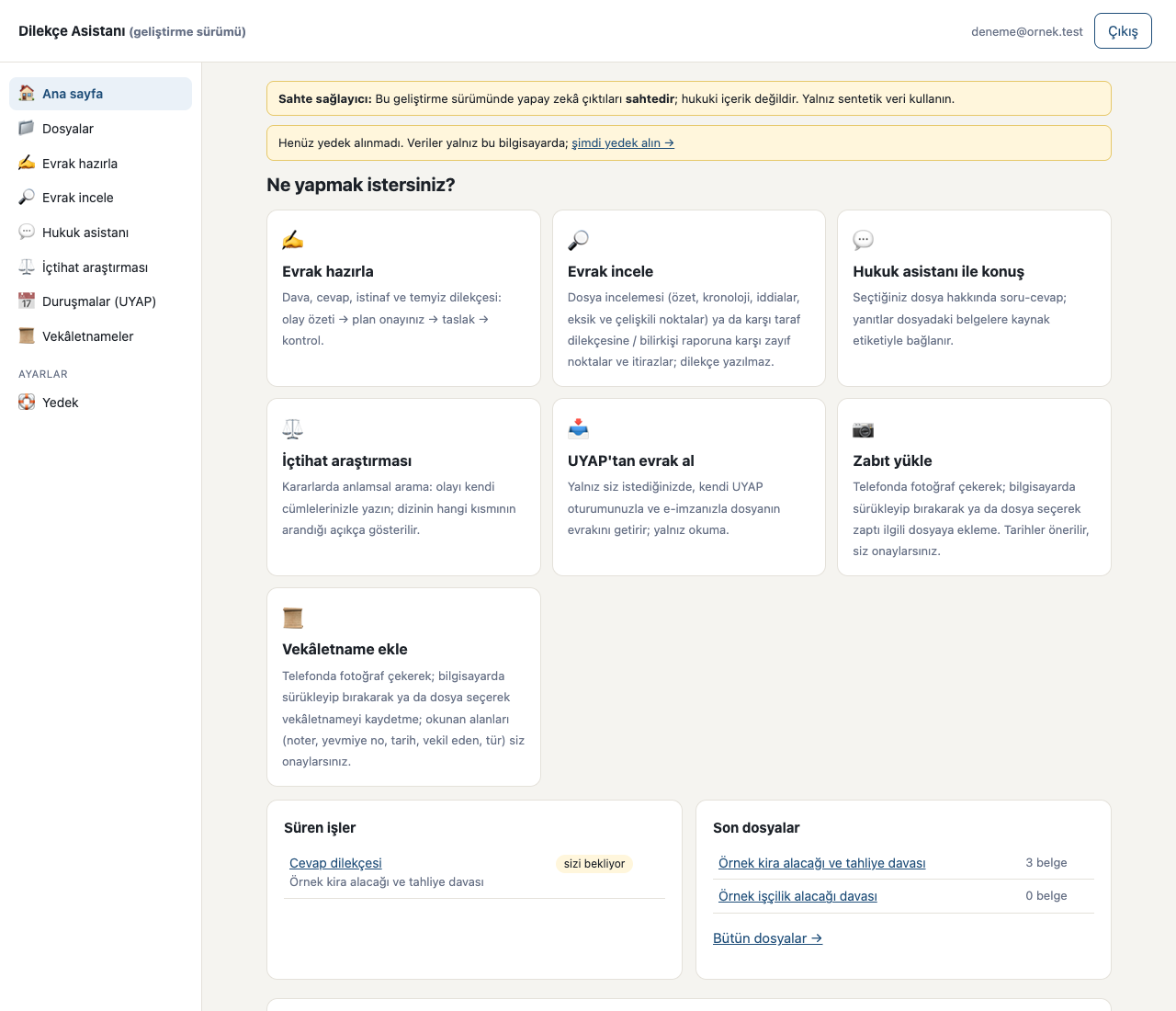
One desktop app for the legal work and the office work of a law firm.
Opens the formats Turkish courts use: UDF (the UYAP court system’s document format), Word, PDF, and scanned documents through OCR.
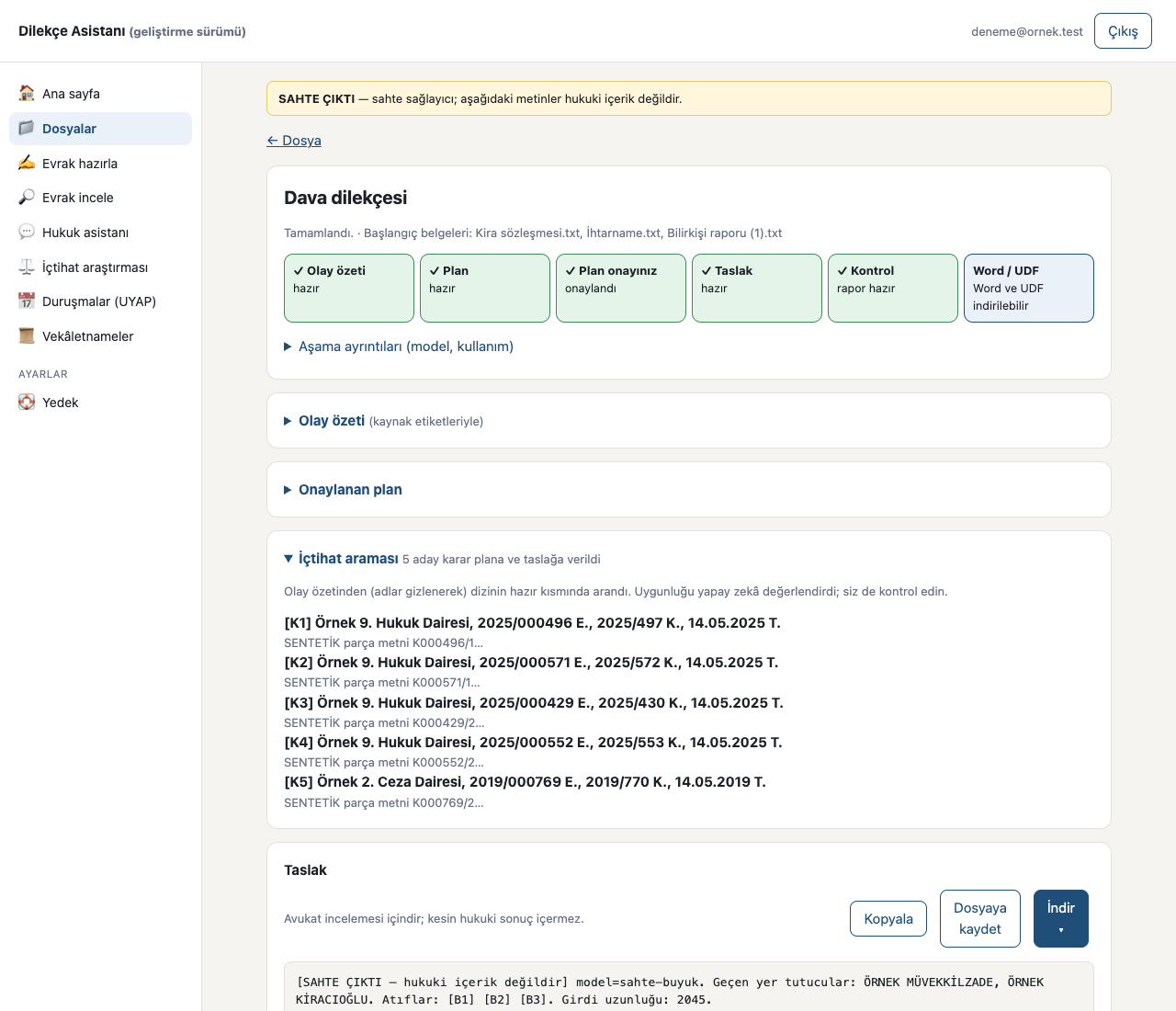
Works through each petition in steps, from the facts of the case to a reviewed draft, and writes the result back to Word and UDF. The lawyer reviews and signs.
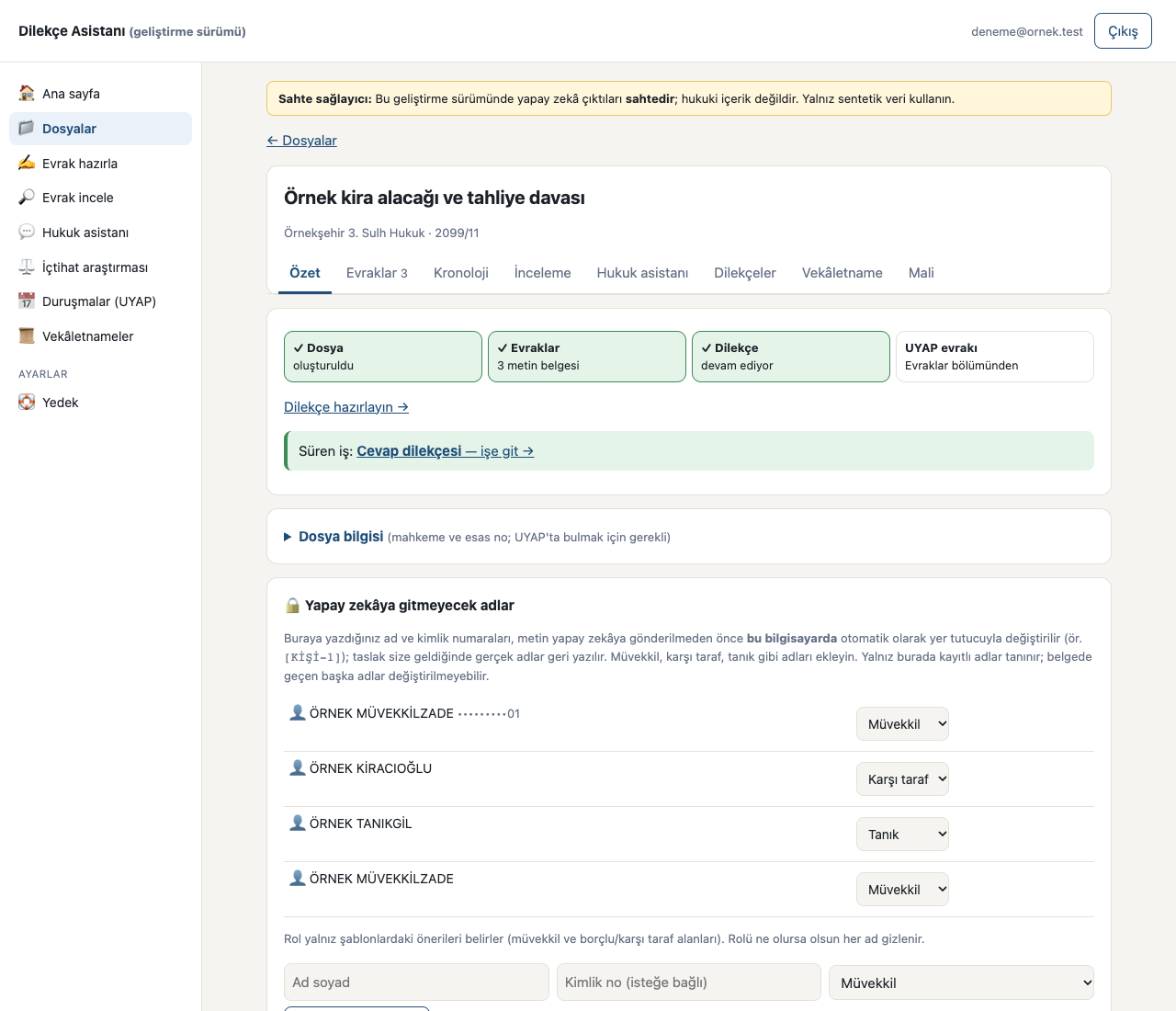
Keeps case files, powers of attorney, expenses and fees in one place, with role-based permissions for everyone in the firm.
A petition is not written in one prompt. SeedLex AI moves through four steps, and each step checks and builds on the one before it.
The pipeline is designed around Claude. Before going live, we compare models step by step on quality and cost with our own measurement harness.
Screens from the development build. The interface is in Turkish, the model provider is a mock, and all data is synthetic.
Legal data is among the most sensitive data there is. The product is built so that it never has to leave the firm.
Client files, client identities and financial records are stored in an encrypted database (SQLCipher) on the lawyer’s own machine.
Our server handles sign-in, firm membership and role-based permissions. It does not store client files.
Data moving between a lawyer’s phone and computer passes through the server as encrypted packages that the server cannot read.
SeedLex AI is a working prototype. The server, the desktop app and a macOS installer are built and covered by automated tests, using synthetic data only. The next step is a pilot with law firms in Türkiye.